Free PDF Computer Graphics Using OpenGL (3rd Edition)
Based on some experiences of lots of people, it is in truth that reading this Computer Graphics Using OpenGL (3rd Edition) can help them making much better selection and also offer more experience. If you want to be among them, allow's purchase this book Computer Graphics Using OpenGL (3rd Edition) by downloading and install the book on link download in this website. You could obtain the soft documents of this publication Computer Graphics Using OpenGL (3rd Edition) to download as well as deposit in your available electronic devices. Exactly what are you awaiting? Let get this publication Computer Graphics Using OpenGL (3rd Edition) online and review them in at any time as well as any kind of location you will certainly check out. It will certainly not encumber you to bring heavy book Computer Graphics Using OpenGL (3rd Edition) inside of your bag.
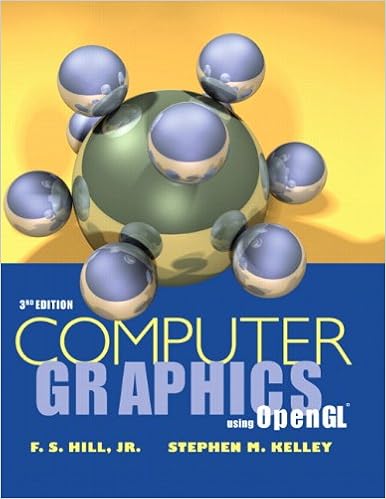
Computer Graphics Using OpenGL (3rd Edition)

Free PDF Computer Graphics Using OpenGL (3rd Edition)
Now available! Computer Graphics Using OpenGL (3rd Edition) as the most wanted publication in the world. Guide that is for grownups as well as teens are coming. You could have been waiting on this publication for long minutes. So, this is the correct time to obtain it. Never ever have fun with the moment anymore, when you have the possibility to gain this book, why should have fun with it? When searching the title of this publication here, you will directly see this web page. It will certainly situate you to make far better selection of reading publication.
The appearance of this publication and also the title is truly fascinating. Nonetheless, the material is also no less interest. Every word that is used and exactly how the writer arranges words to earn sentence as well as definition are really correct and also ideal. It's appropriate for the here and now scenario. Right here, Computer Graphics Using OpenGL (3rd Edition) features exactly how a book is called for. All elements of the excellent books are called for. Additionally, the crucial element that will certainly bring in individuals to check out is likewise supplied flawlessly.
Beginning with seeing this website, you have actually attempted to begin nurturing reviewing a book Computer Graphics Using OpenGL (3rd Edition) This is specialized site that market hundreds collections of books Computer Graphics Using OpenGL (3rd Edition) from lots sources. So, you will not be burnt out anymore to choose guide. Besides, if you additionally have no time at all to search guide Computer Graphics Using OpenGL (3rd Edition), simply sit when you remain in workplace as well as open the web browser. You can discover this Computer Graphics Using OpenGL (3rd Edition) inn this site by connecting to the internet.
This is what you have to carry out in needing exactly what we offer. This is not nonsense, this is something to create much better concept. Basically, publication will not constantly influent somebody to act and assume better. It will certainly depend on just how the people will certainly gaze and think of the lesson offered by the book. Yet, when you have actually handled reading guide arranged, the Computer Graphics Using OpenGL (3rd Edition) will certainly have no matter to require.
Your recently viewed items and featured recommendations
›
View or edit your browsing history
After viewing product detail pages, look here to find an easy way to navigate back to pages you are interested in.
Product details
Paperback: 800 pages
Publisher: Pearson; 3 edition (December 30, 2006)
Language: English
ISBN-10: 0131496700
ISBN-13: 978-0131496705
Product Dimensions:
8.1 x 1.6 x 10.1 inches
Shipping Weight: 3.5 pounds (View shipping rates and policies)
Average Customer Review:
3.6 out of 5 stars
11 customer reviews
Amazon Best Sellers Rank:
#1,177,280 in Books (See Top 100 in Books)
This is a good solid introductory text on computer graphics theory and programming. Note that the book uses OpenGL rather than teaching it, so if you are looking for an OpenGL tutorial you will be disappointed. For that consult the classic "Red Book" on the subject. This book does throw in a couple of advanced topics - fractals, virtual realism, and ray tracing, for example. I really liked how the explanations were very detailed, and how pseudocode accompanies the explanation of every algorithm. The pseudocode is C-like and is therefore easily understandable. Also, the author makes excellent and frequent use of very excellent figures to get his points across. I also liked all of the practice problems, because they are good sanity checks on whether or not you really understand the material.I will add that I was at first hesitant to add this book to my collection, because in the early 90's I used a textbook by this same author in a class I was taking on computer graphics, and it was about the most awful thing I have ever seen in print. There were a couple of good chapters, but most of it was paragraph after paragraph of rambling text without equations, codes, or anything that approached a tutorial. I wasn't a novice to this subject at the time, either, so it wasn't a lack of knowledge on the subject that made me hate that book. I'm saying all of this just in case this was your last experience with this author, don't let it prevent you from getting this book. Hill seems to have learned from his past mistakes, and I highly recommend this text. I notice the table of contents shown is for an older edition. This edition has changed considerably, so I show the new table of contents for the 3rd edition next:Chapter 1 Introduction to Computer Graphics 1.1 What is Computer Graphics? 1.2 Where Computer Generated pictures are Used 1.3 Elements of Pictures created in Computer Graphics. 1.4 Graphics display devices1.5 Graphics Input Primitives and DevicesChapter 2 Getting Started Drawing Figures2.1 Getting started making pictures 2.2 Drawing Basic Graphics Primitives 2.3 Making Line-drawings 2.4 Simple interaction with mouse and keyboardChapter 3 Additional Drawing Tools 3.1. Introduction 3.2. World Windows and Viewports 3.3. Clipping Lines 3.4. Regular Polygons, Circles, and Arcs 3.5. The Parametric Form of a Curve.Chapter 4 Vector Tools for Graphics 4.1. Introduction 4.2. Review of Vectors 4.3. The Dot Product.4.4. The Cross Product of Two Vectors.4.5. Representations of Key Geometric Objects.4.6. Finding the Intersection of two Line Segments.4.7. Intersections of Lines with Planes, and Clipping.4.8. Polygon Intersection Problems.Chapter 5 Transformations of Objects5.1. Introduction5.2. Introduction to Transformations5.3. 3D Affine Transformations5.4. How To Change Coordinate Systems5.5. Affine Transformations used in a Program.5.6. To Draw 3D Scenes Interactively with OpenGL.Chapter 6 Modeling Shapes with Polygonal Meshes.6.1. Introduction6.2. Introduction to Solid Modeling with Polygonal Meshes. 6.3. Polyhedra. 6.4. Extruded Shapes. 6.5. Mesh Approximations to Smooth Objects.6.6. Particle Systems and Physically Based SystemsChapter 7 Three-Dimensional Viewing 7.1 Introduction 7.2. The Camera Revisited. 7.3. To Specify a Camera in a program. 7.4. Perspective Projections of 3D Objects. 7.5. To Produce Stereo Views. 7.6. Taxonomy of Projections.Chapter 8 Rendering Faces for Visual Realism 8.1. Introduction8.2. Introduction to Shading Models8.3. Flat Shading and Smooth Shading.8.4. Adding Hidden Surface Removal.8.5. To Add Texture to Faces.8.6. To Add Shadows of Objects.8.7. OpenGL 2.0 & The Shading Language (GLSL)Chapter 9 Tools for Raster Displays9.1. Introduction9.2. Manipulating Pixmaps.9.3. Combining Pixmaps.9.4. Do It Yourself Line Drawing: Bresenham's Algorithm.9.5 To Define and Fill Regions of Pixels.9.6. Manipulating Symbolically-defined Regions.9.7. Filling Polygon-Defined Regions.9.8. Aliasing and Anti-Aliasing Techniques.9.9. Creating More Shades and Colors.Chapter 10 Curve and Surface Design10.1. Introduction10.2. Describing Curves using Polynomials.10.3. On Interactive Curve Design.10.4. Bezier Curves for Curve Design.10.5. Properties of Bezier Curves.10.6. Finding Better Blending functions.10.7. The B-Spline Basis Functions.10.8. Useful Properties of B-Spline Curves for Design.10.9. Rational Splines and NURBS Curves.10.10. A Glimpse at Interpolation.10.11. Modeling Curved Surfaces.Chapter 11 Color Theory11.1. Introduction11.2. Color Description11.3. The CIE Standard11.4. Color Spaces11.5. Indexed Color and the LUT.11.6. Color Quantization.Chapter 12 Ray Tracing12.1. Introduction12.2. Setting Up the Geometry of Ray Tracing12.3. Overview of the Ray-Tracing Process12.4. Intersection of a Ray with an Object.12.5. Organizing a Ray Tracer Application.12.6. Intersecting Rays with Other Primitives12.7. To Draw Shaded Pictures of Scenes12.8. Adding Surface Texture.12.9. Anti-aliasing Ray Tracings.12.10. Using Extents12.11. Adding Shadows for Greater Realism.12.12. Reflections and Transparency12.13. Compound Objects: Boolean Operations on Objects12.14. Ray Tracing vs. Ray CastingA1. Graphics Tools - Obtaining OpenGL.A2. Some Mathematics for Computer GraphicsA2.1 Some Key Definitions for Matrices and their OperationsA2.2. Some Properties of Vectors and their operations.A2.3. Spherical Coordinates and Direction Cosines. A3. An Introduction to SDL: Scene Description LanguageA3.1. Syntax of SDLA3.2. Macros in SDL.A3.3. Extending SDL.A4. Fractals and The Mandelbrot SetA4.1. IntroductionA4.2. Fractals and Self-SimilarityA4.3. The Mandelbrot SetA5. Relative and Turtle Drawing.A5.1. To Develop moveRel() and lineRel().A5.2. Turtle GraphicsA5.3. Figures Based on Regular Polygons.You'll note that the main difference between the second and third editions is that Hidden Surface Removal and Fractals no longer have dedicated chapters, but additional chapters on other subjects have not been added. The HSR material is now part of another chapter, and the Fractal subject matter is part of the appendix. One positive difference is the addition of some good material on the OpenGL Shading Language, which is a hot topic these days. Also, the material in the appendix on Postscript has been eliminated.
the book is okay, the used condition i got it in was great. I feel like while it explain a lot of things well it leaves out a good amount. Such as actually implementing 3D models in real formats.
This book was a required material for a college course. The professor of the class and this book both love Computer Science THEORY instead of actual PROGRAMMING.There were some programming examples in this book, but they are really bad and a great deal of it is left to the reader to figure out. I passed both the beginner and the advanced courses that used the 1st and 2nd halves of this book. But if your professor sucks at programming because he loves theoretical math too much, this book isn't going to improve your situation. Because you'll have a good understanding of the THEORY of graphics, but no idea how to actually implement that in real-life code.
I'm taking a computer graphics class and this book is used. I bought the new version, the paperback edition. Apart from being completely black and white including the so called color pictures, it's made with very cheap paper and grainy text. It may not look pretty and I could have done with that but it's also missing pages, on page 383 to the next page, it jumps to page 388, and that is simply unacceptable. It's a risk we take when we order online and can't see the merchandise beforehand but after years of ordering through Amazon, this is the first time I've received such a low quality product that is downright incomplete. The two stars is because even with typos and grammatical errors the book's contents are good. It goes through the basics of computer graphics all the way through ray-tracing. It does so with many example programs which I thought was nice. The source of the programs is available on the book's website. The nice thing about this book is that it explains mathematical concepts with a certain simplicity not found in other books of this kind. It's a shame good content has to be weighted down by cheap tactics of the publisher. I'll be more cautious in buying online and will definitely avoid this publisher after this experience. So if you want the book, I suggest you find an old version with the hardcover.
The third edition is a mess. Get the second edition which is 5-star and one of the great classics of computer graphics.Computer Graphics Using Open GL (2nd Edition)
The reading has been helpful with my course and it's not too complicated to understand. The examples are really helpful and so are the diagrams.
Can't beat this price!
Computer Graphics Using OpenGL (3rd Edition) PDF
Computer Graphics Using OpenGL (3rd Edition) EPub
Computer Graphics Using OpenGL (3rd Edition) Doc
Computer Graphics Using OpenGL (3rd Edition) iBooks
Computer Graphics Using OpenGL (3rd Edition) rtf
Computer Graphics Using OpenGL (3rd Edition) Mobipocket
Computer Graphics Using OpenGL (3rd Edition) Kindle